
Invoice numbering: how to choose your invoice number (rules and examples)
Unique, sequential and logically structured: this is how you choose your invoice numbers. With the rules, examples of good numbers and the most common mistakes.
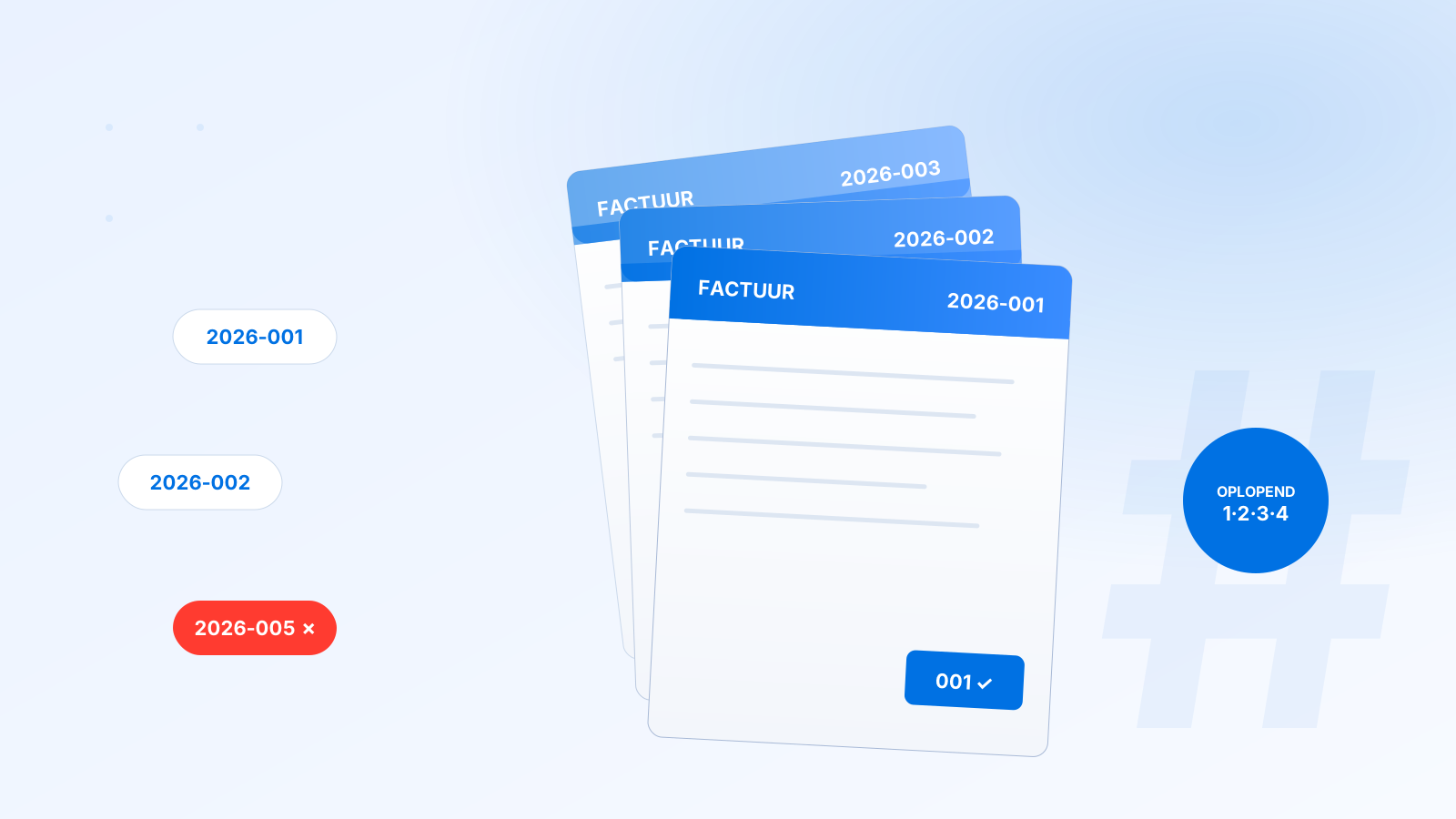
Invoice numbers may seem like a small formality, but the Dutch Tax Administration (Belastingdienst) does pay attention to them. A missing or duplicate invoice number can raise questions during an audit, and in the worst case lead to a correction of your VAT return. Below you'll read the rules, how to choose your first invoice number, examples of good numbers and what to do if something goes wrong.
The rules (Dutch VAT Act, article 35a)
The law says an invoice must have a unique, sequential number, based on one or more series. In practice that means:
- Unique. Each number occurs only once, also across the years.
- Sequential. Every new number is higher than the previous one: 2026-001, 2026-002, 2026-003. Avoid gaps in your series. If a gap does occur, make sure you can explain why.
- One or more series. You may use separate series, for example per year or for credit notes, as long as each series runs on by itself.
What your number looks like is up to you: digits, letters and hyphens are all allowed.
Your first invoice number: where do you start?
You don't have to start at 1. Many business owners choose a number with the year in it, such as 2026-001, or start at, say, 1001, so the number doesn't show it's their first invoice. All that matters is that every next number follows on from it.
Switching from Excel or another program? Choose a number that follows logically from your last invoice, so no duplicate numbers arise. Still deciding between Excel and software? Read invoicing in Excel or with invoicing software.
Examples of good invoice numbers
- 2026-001. Year plus sequence number. You see straight away which year an invoice is from and how many invoices you sent that year.
- 2026-0001. The same, but with room for more than 999 invoices a year.
- F2026-001 and C2026-001. A separate series for invoices (F) and for credit notes (C).
- 26001. Short year plus sequence number. Compact, but less clear.
- 1001, 1002, 1003. Simply sequential from your start. Simple, but after a few years you no longer know which year a number is from.
Can you start again every year?
Yes, if the year is in the number. 2026-001 and 2027-001 are two different numbers, so that's allowed. If you start again every year at just "001", after a year you have two invoices with the same number, and that's not allowed.
Multiple series: is that allowed?
Yes. Business owners use separate series for, for example:
- Sales invoices (F2026-001, F2026-002 …)
- Credit notes (C2026-001, C2026-002 …)
- Different branches or parts of the business
That's allowed, as long as each series runs on by itself.
Common mistakes
- Throwing away an invoice because the customer rejected it. The invoice has been sent, the number has been used. Make a credit note for the full amount and then send a new invoice with a new number.
- The same number for a monthly invoice. An invoice that comes back every month also gets a new, unique number every time.
- A mistake in your Excel list. A number skipped or issued twice, because you keep the list by hand.
- Test invoices in your real series. If you make a trial invoice in your real administration, that number is in your series. Use a credit note for it, or test outside your administration.
Wrong invoice number? How to fix it
- Wrong invoice sent: make a credit note and send a new invoice. The difference with a corrective invoice is explained in credit note or corrective invoice.
- Two invoices with the same number: credit one of them and send it again with a new number.
- A gap in your series: write down why the number wasn't used, for example because it was a draft that was never sent.
Frequently asked questions
Can an invoice number contain letters?
Yes. Letters, digits and hyphens are allowed, as long as the number is unique and the series runs on.
Does a credit note need its own number?
Yes. A credit note also gets a unique number. That can be in your normal series or in a separate series for credit notes.
What else has to be on an invoice?
Besides the invoice number, among other things your KvK and VAT number, the invoice date, a description and the VAT. See the full list in mandatory invoice details.
How Invoisio handles your invoice numbers
In Invoisio you choose a prefix once, for example F or 2026-, and a starting number. After that, every new invoice automatically gets the next number. The same number can never occur twice within your business. Want to start again in a new year? Change the prefix to 2027-, and the new series starts at your starting number. If you have more than one business in Invoisio, each business has its own series.
Try Invoisio free for 30 days, no credit card needed.
Was this helpful?