
Late payers? Turn reminders into collection (without conflict)
A customer who doesn't pay wreaks havoc on your cash flow. A professional reminder sequence solves 80% of cases — before you need to call a collection agency.
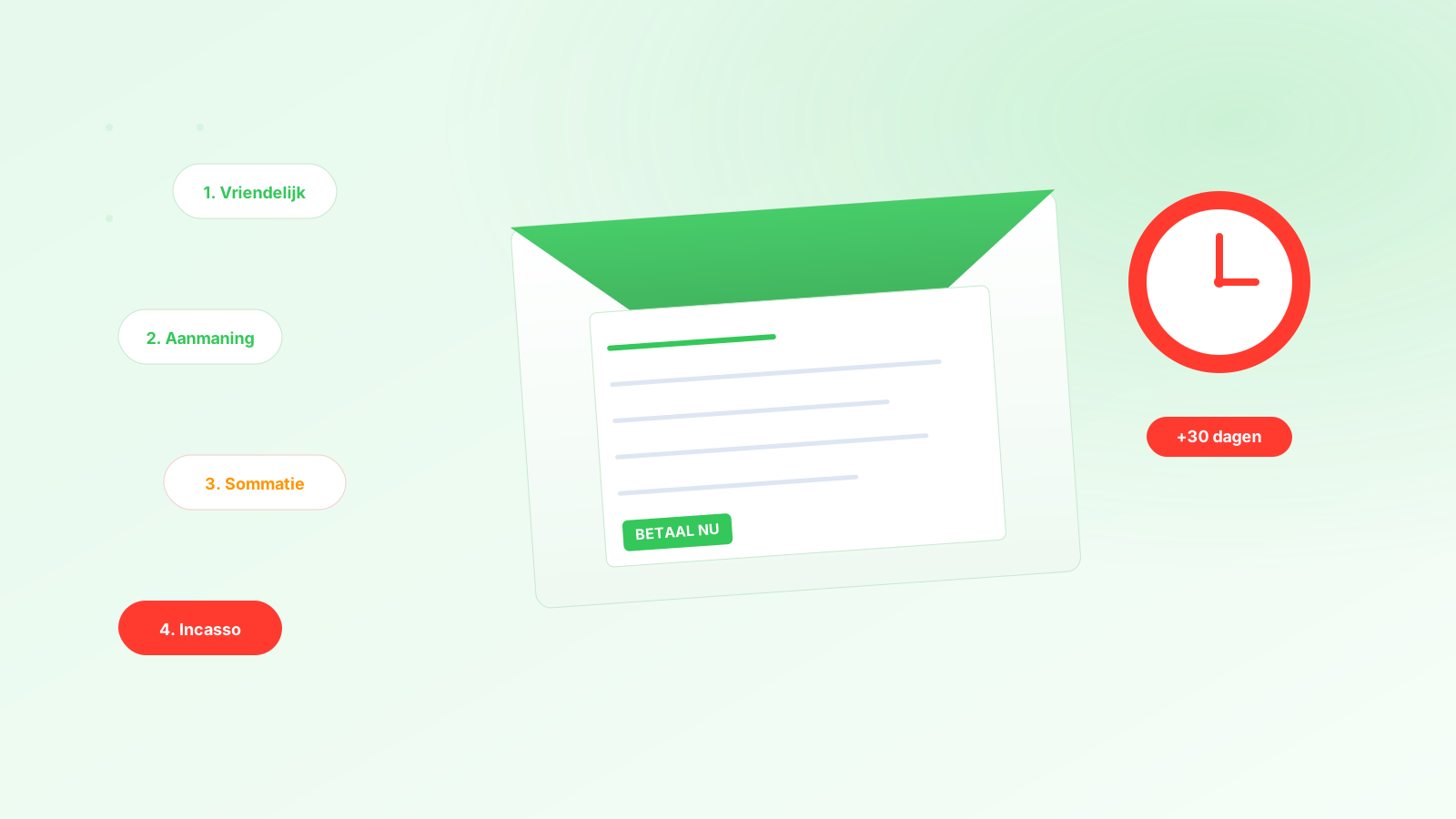
One in three freelancers deal with late payers every month. Not only annoying — for those working on tight margins, it's immediate cash flow pain. The good news: a structured reminder sequence solves most cases without needing lawyers or collection agencies.
Step 0: prevent rather than cure
The best reminder flow starts before your invoice. Three measures that largely prevent the problem:
- Short payment terms. 14 days, not 30. For B2B, 30 is standard, but 14 is acceptable if you mention it in your quote.
- Online payment button on the invoice. iDEAL or credit card straight from the PDF — friction removed, payments in faster.
- Prepayment for new clients. First job 50% upfront, or 100% for small amounts.
The flow: 4 steps
Step 1 — Friendly reminder (3 days after due date)
No legal jargon. Something like: "Hi {client}, just a quick reminder — invoice {number} was scheduled to be paid on {date}. Maybe something went wrong during processing? Happy to help if you have questions."
Effectiveness: 50-60% pay after this email. Forgotten payments happen often.
Step 2 — Second reminder with explicit deadline (10 days after due date)
More direct. Mention a new deadline (1 week later), offer a payment plan if they're struggling with cash flow, and — importantly — note that legal collection costs and statutory interest will be charged after the deadline.
Effectiveness: another 25-30% pay or call to arrange a plan.
Step 3 — Formal notice (14th day of default — legally required for consumers)
For consumers: before you can charge collection costs, you must send a 14-day letter explicitly stating the legal consequences. For B2B you can charge costs from the due date itself, but a formal notice is always useful.
Contents:
- Complete invoice details
- New due date (14 days after this letter)
- Notice of collection costs (€40 minimum, 15% on the first €2,500)
- Statutory interest from original due date (8.75% in 2026)
- Notice that non-payment will result in the case being handed to a collection agency
Step 4 — Collection (after 30+ days default)
Only consider a collection agency here. Standard fees are 15% commission + €50 startup costs — all recoverable from the debtor. Or use an online collection tool if the debtor is in the Netherlands and the amount is under €25,000 (small claims court).
Legal collection costs — what can you charge?
| Principal amount | Collection costs |
|---|---|
| Up to €266 | €40 (minimum) |
| €266 — €2,500 | 15% of principal |
| €2,500 — €5,000 | €375 + 10% on amount above €2,500 |
| €5,000 — €10,000 | €625 + 5% on amount above €5,000 |
The tone: professional, not emotional
Many freelancers experience late payers as a personal rejection. That's understandable, but not productive. Keep your reminders strictly professional and factual. No blame, no passive-aggressive comments — just the facts and the consequences.
How Invoisio automates this
Set up your reminder schedule per client (for example day 3, 10, 17 after due date). Invoisio automatically sends professionally written emails on those days. You get a notification as soon as the client has paid. And if you want to escalate to collection, all correspondence + invoice is neatly in one PDF ready to forward.
No more awkward "hey, are you still paying?" phone calls — the software does the heavy lifting, you maintain the relationship.
Was this helpful?