
Verifactu in Spain: mandatory invoicing-software rules from 2027 explained
Verifactu requires invoicing software in Spain to record every invoice immutably and report it to the tax authority. Final deadlines: 1 January 2027 for companies, 1 July 2027 for the self-employed. Here is what changes.
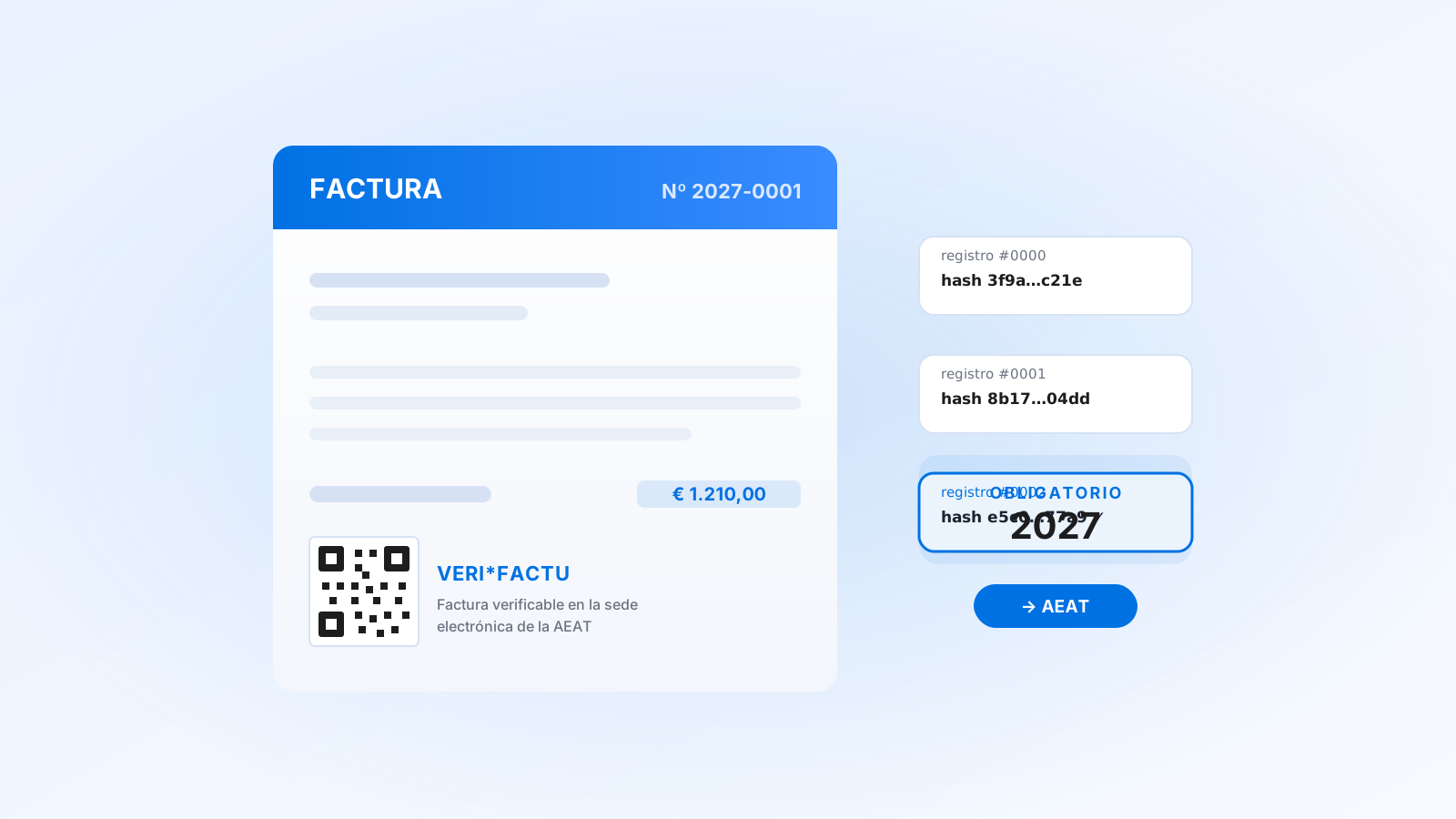
Verifactu is the Spanish tax authority's (AEAT) new system that requires invoicing software to keep an unalterable record of every invoice and, optionally, send it to the tax office in real time. After two postponements the dates are now final: 1 January 2027 for companies subject to corporate income tax and 1 July 2027 for the self-employed (autónomos) and all other taxpayers.
What exactly is Verifactu?
The legal basis is Spain's anti-fraud law (Ley 11/2021) and Royal Decree 1007/2023, which approves the regulation on invoicing systems (SIF). The goal is simple: no invoice may be modified or deleted after issue without leaving a trace. Software must therefore guarantee integrity, preservation, accessibility, legibility, traceability and unalterability of its records.
Final dates after Royal Decree-law 15/2025
- 1 January 2027 — corporate income tax payers (S.L., S.A., etc.).
- 1 July 2027 — self-employed professionals and all other obliged parties.
The postponement buys time, but changes neither the obligation nor the technical requirements.
Who is affected?
Every Spanish business or freelancer that issues invoices with software. Exempt are taxpayers in the SII system (who already report invoices immediately), businesses in the Basque Country and Navarre (own systems: TicketBAI and Batuz), and anyone not obliged to issue invoices. Foreign companies without a Spanish establishment are not covered — but their Spanish customers will expect Verifactu-compliant invoices from their own suppliers.
What the software must do
- Invoicing record for every issued (and every cancelled) invoice.
- Chained hash: each record contains the fingerprint of the previous one, so any alteration breaks the chain.
- Timestamp on every record.
- QR code on the invoice allowing the customer to verify it with the AEAT, plus the legend "VERI*FACTU" when records are sent in real time.
- Event log of the system.
- Declaration of conformity from the software vendor.
Two modes
Either send each record to the AEAT the moment an invoice is issued ("Verifactu" mode) or keep the records digitally signed in your own system and hand them over on request ("non-Verifactu"). The real-time mode is the recommended route: fewer retention obligations and more certainty in an audit.
Penalties
Article 201 bis of the General Tax Law: €50,000 per financial year for using non-compliant software, €150,000 per year and system type for vendors selling it.
Not the same as B2B e-invoicing
Verifactu regulates how software creates invoices. Spain's mandatory business-to-business e-invoice (Ley Crea y Crece) regulates the exchange format and is still awaiting its implementing regulation. Both are coming; Verifactu arrives first.
How to prepare now
- Ask your software vendor for its declaration of conformity and adaptation timeline.
- Use sequential numbering without gaps from today and never edit an issued invoice — correct it with a credit note.
- Stop invoicing in Excel or Word: they cannot guarantee unalterability.
In Invoisio, issued invoices are already immutable (corrections go through credit notes), numbering is sequential and every document is archived as a PDF. Invoicing Spanish clients with Invoisio and wondering what Verifactu means for you? Email support@invoisio.com.
Was this helpful?